I was excited to learn recently that Google ebooks has now made buying through local bookstores much, much easier. For reasons previously discussed on this blog, I am no fan of Amazon. I was sad to learn last year that my favourite source for ebooks, The Book Depository, had been purchased by Amazon.
Never fear! Google ebooks has teamed up with independent bookstores to give you both range AND the ability to support your friendly neighbourhood indy bookstore. I found out about this through Laura Miller, who wrote about it here. The ebooks are sourced from Google ebooks, but you buy through your favourite bookstore's website and they get a cut.
The idea is still catching on in Australia, but at present you can already support Australian businesses by buying your Google ebooks through Booktopia or Dymocks.
Don't forget, if you're looking for places to get ebooks in general, Project Gutenberg is your best source for free ebooks of out-of-print books, and Inkmesh can help you find tricky-to-find ebooks.
Monday, January 30, 2012


Saturday, January 28, 2012
Stunning stationery, and the lost art of letter writing
I've always wanted to be a 'woman of letters', someone who can write long newsy letters about day-to-day nothings and the weather. I've been reading about C.S. Lewis recently (there is a forthcoming blog in that, I promise), and Lewis was a great letter-writer who could get away with writing about things like snow:
"We had about a week of snow with frost on top of it and then the rime coming out of the air and making thick woolly formations on every branch. The little wood was indescribably beautiful. I used to go and crunch about on the crusted snow in it every evening--for the snow kept it light long after sunset. It was a labyrinth of white--the smallest twigs looking thick as seaweed and building up a kind of cathedral vault overhead."
I can't help thinking the pace of life is a bit too fast for me to bother writing lengthy descriptions of weather (besides, Australia's sticky summers don't inspire the same poetic style), but I have enlisted Florentine Australia to help me get inspired to write letters to distant friends. They're based in Sydney, but they also have an online store with reliable delivery.
Last year I bought a dip pen, along with a wax seal with my initials on it, and was delighted by the quality of both the products and the customer service. Florentine's commitment to customer satisfaction became apparent when I received an email saying that unfortunately one of the products I had requested was currently out of stock. I had two choices: I could wait a week for the product to arrive (they would send the rest immediately, of course), or I could have another, more expensive product in its place.
Here's the pen of which I am now the proud owner:

To complement my set, I received a blotter for my birthday. Now all I need is an inkwell!
It certainly has been a pleasure using beautiful notepaper, dipping my pen into ink and listening to the the slight scratch as my pen moves across the surface of the paper. Letter-writing has become a tactile experience I really enjoy. Now, to find something to write about which isn't already known to my friends via facebook.
"We had about a week of snow with frost on top of it and then the rime coming out of the air and making thick woolly formations on every branch. The little wood was indescribably beautiful. I used to go and crunch about on the crusted snow in it every evening--for the snow kept it light long after sunset. It was a labyrinth of white--the smallest twigs looking thick as seaweed and building up a kind of cathedral vault overhead."
I can't help thinking the pace of life is a bit too fast for me to bother writing lengthy descriptions of weather (besides, Australia's sticky summers don't inspire the same poetic style), but I have enlisted Florentine Australia to help me get inspired to write letters to distant friends. They're based in Sydney, but they also have an online store with reliable delivery.
Last year I bought a dip pen, along with a wax seal with my initials on it, and was delighted by the quality of both the products and the customer service. Florentine's commitment to customer satisfaction became apparent when I received an email saying that unfortunately one of the products I had requested was currently out of stock. I had two choices: I could wait a week for the product to arrive (they would send the rest immediately, of course), or I could have another, more expensive product in its place.
Here's the pen of which I am now the proud owner:

To complement my set, I received a blotter for my birthday. Now all I need is an inkwell!
It certainly has been a pleasure using beautiful notepaper, dipping my pen into ink and listening to the the slight scratch as my pen moves across the surface of the paper. Letter-writing has become a tactile experience I really enjoy. Now, to find something to write about which isn't already known to my friends via facebook.
Thursday, January 19, 2012
Watchmen and philosophy
Last night I finally got around to watching Watchmen, the 2009 film of Alan Moore's comic book. I had been looking forward to it because a few of my philosophical friends had told me that Watchmen is full of interesting philosophical perspectives.
While it's true that you could use the film as a springboard for philosophical discussions (e.g.; which character is more moral: the profoundly detached Dr. Manhattan or the psychopathically utilitarian Ozymandias?), I found myself disappointed on the philosophical front. At first I wasn't sure why, because the film does clearly present a range of philosophically interesting ideas. Today, I finally put my finger on the problem.
Philosophy isn't just ideas. Philosophy is about what we care about.
I loved the way Watchmen was shot, the central idea that people who go in for masked crime-fighting probably aren't in it for pure reasons (liberty, justice and the American dream), the action sequences (I could actually tell what was happening!) and the fabulous opening sequence with the iconic blood-spattered smiley face. What I didn't love was a single one of the characters, the world it was set in or the complexities of the story.
I found myself emotionally detached from the film the entire way through. I didn't care what happened, because the characters were uninteresting and the fictional world unbearably bleak and devoid of hope. I don't know how much of this is due to the original graphic novel, as I haven't yet read it, though I do know the film adaption of Moore's V for Vendetta doesn't commit the same sins. I don't think this is just a matter of my temperament or my particular relationship to the text. Watchmen felt as if the filmmakers were so engrossed in visual mastery and ideas that they forgot to throw in anything to make the viewer care. The world is ugly, the characters lack character. I didn't even catch most of their names, superhero or ordinary. I recall the Comedian, who dies in the first few minutes of the film, and the Silk Spectre, who retires in the opening credits. The main character (who, I discovered through Google, is actually the second Silk Spectre) was unmemorable enough that she remains in my mind 'the chick who played Tess in 27 Dresses'.
In response to this, my literature-loving self screams in protest. This is not the ideal relationship between fiction and philosophy! Fiction can, and often does, make philosophical ideas apparent, but it contributes nothing to philosophy if it doesn't first and foremost make us care. All fiction is philosophy, and films that are overt about it (like Watchmen) often do a terrible job at communicating it. (I blogged here about the relationship between fantasy fiction and philosophy, a relationship which at its best is a match made in Heaven.)
Fiction is the place where philosophy plays the heartstrings.
Philosophy is Gandalf plummeting into blackness because some things are more important than the life of a grand wizard (The Lord of the Rings: The Fellowship of the Ring). Philosophy is Satine and Christian struggling with the conflicts between prostitution and would-be monogamous love (Moulin Rouge). Philosophy is Guido's unshakeable conviction that life is beautiful despite the horrors of WWII (Life is Beautiful). Philosophy is the clash between giving to the poor and obeying the law (any version of Robin Hood). Philosophy is the realisation that love actually is all around (Love Actually). Philosophy is the feminism in freely choosing marriage and a domestic life (Mona Lisa Smile).
Philosophy is intrinsically bound up in what we care about, or it is nothing.

While it's true that you could use the film as a springboard for philosophical discussions (e.g.; which character is more moral: the profoundly detached Dr. Manhattan or the psychopathically utilitarian Ozymandias?), I found myself disappointed on the philosophical front. At first I wasn't sure why, because the film does clearly present a range of philosophically interesting ideas. Today, I finally put my finger on the problem.
Philosophy isn't just ideas. Philosophy is about what we care about.
I loved the way Watchmen was shot, the central idea that people who go in for masked crime-fighting probably aren't in it for pure reasons (liberty, justice and the American dream), the action sequences (I could actually tell what was happening!) and the fabulous opening sequence with the iconic blood-spattered smiley face. What I didn't love was a single one of the characters, the world it was set in or the complexities of the story.
I found myself emotionally detached from the film the entire way through. I didn't care what happened, because the characters were uninteresting and the fictional world unbearably bleak and devoid of hope. I don't know how much of this is due to the original graphic novel, as I haven't yet read it, though I do know the film adaption of Moore's V for Vendetta doesn't commit the same sins. I don't think this is just a matter of my temperament or my particular relationship to the text. Watchmen felt as if the filmmakers were so engrossed in visual mastery and ideas that they forgot to throw in anything to make the viewer care. The world is ugly, the characters lack character. I didn't even catch most of their names, superhero or ordinary. I recall the Comedian, who dies in the first few minutes of the film, and the Silk Spectre, who retires in the opening credits. The main character (who, I discovered through Google, is actually the second Silk Spectre) was unmemorable enough that she remains in my mind 'the chick who played Tess in 27 Dresses'.
In response to this, my literature-loving self screams in protest. This is not the ideal relationship between fiction and philosophy! Fiction can, and often does, make philosophical ideas apparent, but it contributes nothing to philosophy if it doesn't first and foremost make us care. All fiction is philosophy, and films that are overt about it (like Watchmen) often do a terrible job at communicating it. (I blogged here about the relationship between fantasy fiction and philosophy, a relationship which at its best is a match made in Heaven.)
Fiction is the place where philosophy plays the heartstrings.
Philosophy is Gandalf plummeting into blackness because some things are more important than the life of a grand wizard (The Lord of the Rings: The Fellowship of the Ring). Philosophy is Satine and Christian struggling with the conflicts between prostitution and would-be monogamous love (Moulin Rouge). Philosophy is Guido's unshakeable conviction that life is beautiful despite the horrors of WWII (Life is Beautiful). Philosophy is the clash between giving to the poor and obeying the law (any version of Robin Hood). Philosophy is the realisation that love actually is all around (Love Actually). Philosophy is the feminism in freely choosing marriage and a domestic life (Mona Lisa Smile).
Philosophy is intrinsically bound up in what we care about, or it is nothing.
Sunday, January 15, 2012
The Sense of an Ending
My intention to blog once a month was left unfulfilled in December. But then, so are most intentions for December. I have much to blog about (including Google ebooks) but for now, a quick post about a recent Laura Miller article at Salon which can be found here. Miller notes that endings aren't as widely discussed and remembered as beginnings, and invites readers to post their favourite novel endings.
I had to smile when one reader mentioned the last line of C.S. Lewis's Prince Caspian: " 'Bother!' said Edmund. 'I've left my new torch in Narnia.' "
The ending that immediately jumped to mind for me was the deliciously creepy final paragraph of Charlotte Perkins Gilman's 'The Yellow Wallpaper': "Now why should that man have fainted? But he did, and right across my path by the wall, so that I had to creep over him every time!" (Of course, not so deliciously creepy if you haven't read the story.)
I also love the ending of Neil Gaiman's Stardust, with it's haunting final line: "She says nothing at all, but simply stares upward into the dark sky and watches, with sad eyes, the slow dance of the infinite stars." But again, the impact of this line is non-existent if you haven't been on the journey, if you are not acquainted with the 'she' in question.
Of course, I adore both endings of The Princess Bride (the Morgenstern ending and the Goldman ending): "I'm not trying to make this a downer, understand. I mean, I really do think that love is the best thing in the world, except for cough drops. But I also have to say, for the umpty-umpth time, that life isn't fair. It's just fairer than death, that's all."
I had to smile when one reader mentioned the last line of C.S. Lewis's Prince Caspian: " 'Bother!' said Edmund. 'I've left my new torch in Narnia.' "
The ending that immediately jumped to mind for me was the deliciously creepy final paragraph of Charlotte Perkins Gilman's 'The Yellow Wallpaper': "Now why should that man have fainted? But he did, and right across my path by the wall, so that I had to creep over him every time!" (Of course, not so deliciously creepy if you haven't read the story.)
I also love the ending of Neil Gaiman's Stardust, with it's haunting final line: "She says nothing at all, but simply stares upward into the dark sky and watches, with sad eyes, the slow dance of the infinite stars." But again, the impact of this line is non-existent if you haven't been on the journey, if you are not acquainted with the 'she' in question.
Of course, I adore both endings of The Princess Bride (the Morgenstern ending and the Goldman ending): "I'm not trying to make this a downer, understand. I mean, I really do think that love is the best thing in the world, except for cough drops. But I also have to say, for the umpty-umpth time, that life isn't fair. It's just fairer than death, that's all."
Sunday, November 20, 2011
Sequels: The Sending and The Magician King
This month I've been reading long-awaited sequels.
Isobelle Carmody's much-anticipated The Sending was finally released at the end of October. Originally planned as the final book of five in the Obernewtyn Chronicles (the first book is Obernewtyn, first published in 1987), The Sending is actually book number six, with book seven, The Red Queen, due next year. I started reading the Obernewtyn Chronicles at about age 16, and have been awaiting a conclusion to the series ever since.
What can I say about The Sending? If, like me, you read and loved the Obernewtyn Chronicles as a teenager, it's definitely worth reading. Isobelle Carmody's prose doesn't exactly sparkle; the plot is poorly paced and the first-person narrative is at times frustrating. However, the characters are the same characters you read about and loved all those years ago. They are dear friends, and the opportunity to once more glimpse them as they live and breathe and dream is welcome. Carmody has not lost touch with her characters over the 25+ years she has spent writing the Obernewtyn Chronicles. I love these characters so much that I read the book in a single sitting.
However, a few warnings: Elspeth, the narrator, remains somewhat short-sighted and often jumps to conclusions on little evidence. This becomes a problem because the narrative is intensely focused on Elspeth's introspection, so the reader is often subjected to several pages of soliloquy in which Elspeth bemoans imagined misfortunes. The focus on introspection also means that the plot moves much more slowly than necessary. The rationale for splitting The Sending into two books (The Sending and The Red Queen) was that there is just too much story to fit into one book, but The Sending could easily have been half the length.

The other long-awaited sequel I read this month is The Magician King by Lev Grossman, sequel to his The Magicians. The Magicians is a little-known but brilliant novel about Quentin Coldwater, a Brooklyn teenager who ends up attending Brakebills, a university of magic. One review I read described The Magicians as 'Harry Potter meets Trainspotting'. There is fantasy, there is magic, but these books are definitely for grown-ups. Read Laura Miller's Salon review of The Magicians here.
In stark contrast to The Sending, Grossman's characters are not always likeable (Quentin can be quite a dick at times), but the plot of The Magician King always moves along. As in The Magicians, Grossman continues to draw on both (quite overtly) Rowling's Harry Potter and (more subtly) Lewis's Narnia, exposing fantasy tropes to the cold light of adult life, making magic uncomfortable and real, yet somehow leaving a sense of wonder. Grossman has a rare talent: he is able to write fiction which is unflinching and sometimes cynical, and to write it in a fantasy novel. This is no broody literary novel with magical elements: Grossman never forgets that he is writing genre fiction, and genre fiction demands to be plot-driven. Give his books a go. You won't regret it.
Isobelle Carmody's much-anticipated The Sending was finally released at the end of October. Originally planned as the final book of five in the Obernewtyn Chronicles (the first book is Obernewtyn, first published in 1987), The Sending is actually book number six, with book seven, The Red Queen, due next year. I started reading the Obernewtyn Chronicles at about age 16, and have been awaiting a conclusion to the series ever since.
What can I say about The Sending? If, like me, you read and loved the Obernewtyn Chronicles as a teenager, it's definitely worth reading. Isobelle Carmody's prose doesn't exactly sparkle; the plot is poorly paced and the first-person narrative is at times frustrating. However, the characters are the same characters you read about and loved all those years ago. They are dear friends, and the opportunity to once more glimpse them as they live and breathe and dream is welcome. Carmody has not lost touch with her characters over the 25+ years she has spent writing the Obernewtyn Chronicles. I love these characters so much that I read the book in a single sitting.
However, a few warnings: Elspeth, the narrator, remains somewhat short-sighted and often jumps to conclusions on little evidence. This becomes a problem because the narrative is intensely focused on Elspeth's introspection, so the reader is often subjected to several pages of soliloquy in which Elspeth bemoans imagined misfortunes. The focus on introspection also means that the plot moves much more slowly than necessary. The rationale for splitting The Sending into two books (The Sending and The Red Queen) was that there is just too much story to fit into one book, but The Sending could easily have been half the length.

The other long-awaited sequel I read this month is The Magician King by Lev Grossman, sequel to his The Magicians. The Magicians is a little-known but brilliant novel about Quentin Coldwater, a Brooklyn teenager who ends up attending Brakebills, a university of magic. One review I read described The Magicians as 'Harry Potter meets Trainspotting'. There is fantasy, there is magic, but these books are definitely for grown-ups. Read Laura Miller's Salon review of The Magicians here.
In stark contrast to The Sending, Grossman's characters are not always likeable (Quentin can be quite a dick at times), but the plot of The Magician King always moves along. As in The Magicians, Grossman continues to draw on both (quite overtly) Rowling's Harry Potter and (more subtly) Lewis's Narnia, exposing fantasy tropes to the cold light of adult life, making magic uncomfortable and real, yet somehow leaving a sense of wonder. Grossman has a rare talent: he is able to write fiction which is unflinching and sometimes cynical, and to write it in a fantasy novel. This is no broody literary novel with magical elements: Grossman never forgets that he is writing genre fiction, and genre fiction demands to be plot-driven. Give his books a go. You won't regret it.
Sunday, October 9, 2011
Pratchett's utopian dystopia
"Chaos is found in greatest abundance wherever order is being sought.
It always defeats order, because it is better organized." -Terry Pratchett, Interesting Times
"Citizens hate living there and, if they have to move away ... can't wait to get back so they can enjoy hating
living there some more." -Terry Pratchett, Moving Pictures
living there some more." -Terry Pratchett, Moving Pictures
I have been reading a lot of Pratchett this year, and one interesting (and somewhat surprising) theme in the Discworld books keeps sticking out to me. Pratchett's characters are ambitious, they dream of a better world, but whenever a better world comes along they are distinctly uncomfortable with it.
Ankh-Morpork, the biggest city in Discworld, is presented as a kind of utopian dystopia: a place where chaos reigns; where peace is maintained simply because the citizens are used to major political upheaval; you can depend on not being able to trust anyone; you get a receipt for being mugged; the river is so polluted it's deadly and law-enforcement amounts to pitting one criminal against another in a delicate balancing act. And yet Ankh-Morpork is described so lovingly that you'd be forgiven for thinking it's heaven on earth.
This has got me thinking, and I wonder if Pratchett is onto something: perhaps people really are happier with the chaos and the imperfections of everyday life than they would be with peace, prosperity and equality. At any rate, Pratchett is right about one thing: even in dystopian surroundings, life goes on and life is a wonderful, adventurous thing.
Speaking of Ankh-Morpork, a board game based on the loveable fantasy city was released last month, and my copy arrived last week. If you're a Discworld fan, it's worth checking out. The game is unbelievably fun, and loyal to the characters represented. The first time I played it I enjoyed many shared giggles with my fellow players over the depictions of characters we know and love.

Tuesday, September 13, 2011
Oh, Mr. G!
Not only is Neil Gaiman utterly fabulous, he also affiliates himself with so many fabulous people/shows/projects that I could happily spend weeks watching and listening to his various appearances and interviews in various wonderful settings and with various wonderful people. The latest of these is his appearance in Season 5, Episode 7 of The Guild.
He says in his blog: "Sometimes I wonder what would happen if the version of me I play in The Guild and the version of me I play in The Simpsons and the version of me I played in Arthur teamed up to fight crime and encourage people to read by hiding in their fast food."
He says in his blog: "Sometimes I wonder what would happen if the version of me I play in The Guild and the version of me I play in The Simpsons and the version of me I played in Arthur teamed up to fight crime and encourage people to read by hiding in their fast food."
When is a character essentially gendered?

Simply put, the book was far too gendered for my taste. I want to be cautious here, because I think this is an area in which feminists sometimes do more harm than good. They obsess over the representation of women in literature and cinema, and in doing so sometimes turn characters into gendered objects. In my ideal feminist world, female characters aren't considered good representations of women because they aren't considered as representations of gender at all. They are just characters. Fictional people with interesting motivations and complex personalities. Sometimes women are reduced to their biological or social roles by the critical feminist, who insists that a character's worth should be evaluated in terms of how successfully she represents women.
Thursday, September 8, 2011
The Sending
For those who haven't already heard, The Sending, book 6 of Isobelle Carmody's Obernewtyn Chronicles, is due at the end of October. However, as with book 5 (The Stone Key), this will no longer be the final book of the Obernewtyn Chronicles, with one more to come. At the moment, the expected release date of the final book is early next year, but I'll believe it when I see it.
If you're not familiar with the Obernewtyn Chronicles, they are a teen fantasy series by Australian author Isobelle Carmody. The first book was published in 1987. I don't yet know whether I ought to recommend them - I'm sure I will write about it once I have read the final book.

If you're not familiar with the Obernewtyn Chronicles, they are a teen fantasy series by Australian author Isobelle Carmody. The first book was published in 1987. I don't yet know whether I ought to recommend them - I'm sure I will write about it once I have read the final book.

Sunday, August 28, 2011
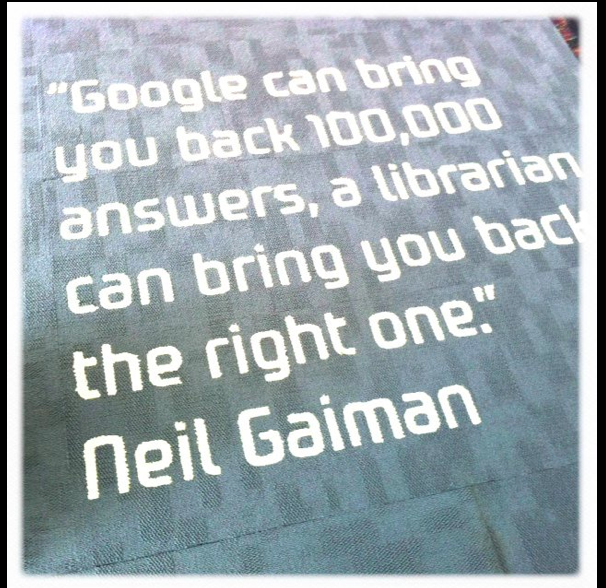
A librarian can bring you back the right one
This is the carpet in Canberra's Gunghalin Public Library. Awesome.
Saturday, August 20, 2011
The Princess Bride - A Hot Fairy Tale
I collect editions of The Princess Bride, and have decided to start providing descriptions and details of my editions on this blog. You can find an explanation about this and a list of editions here. I will most probably backdate posts which contain further editions, so that my blog doesn't become unreadable to passers-by, so if you're interested in the list, make sure you click on the link.
I'm going to start with an edition with the original, 1973 text. It's a reasonably ordinary edition, printed on cheap paper for a mass market audience. The most exciting thing about it is that it has a glossy, colour map insert in the middle of the book.
Title on cover: William Goldman's The Princess Bride
ISBN: 0345315324
Format: paperback
Measurements: 108 x 174mm
Front cover, spine, and back cover:


I'm going to start with an edition with the original, 1973 text. It's a reasonably ordinary edition, printed on cheap paper for a mass market audience. The most exciting thing about it is that it has a glossy, colour map insert in the middle of the book.
Title on cover: William Goldman's The Princess Bride
ISBN: 0345315324
Format: paperback
Measurements: 108 x 174mm
Front cover, spine, and back cover:


Adventures in Fabletown


Recently I've been reading Bill Willingham's comic book series, Fables. The series started out as a set of cute stories with fairytale characters in them, I suspect in an attempt from Vertigo to retain their Sandman audience after Sandman ended. Over time, however, (I'm up to volume 7) this series has become a serious literary contender. Every time I start reading a volume, I can't put it down. There's all the things that fairytales should have - blood, sex, revenge, murder, magic - and there's also modern sarcasm and wit, beautiful art, and just the right amount of subversion (the picture top left depicts an impoverished Prince Charming seducing a hapless New Yorker).
The characters, over time, have become characters I care about, and I was astonished to discover how pleased I was to find rounded, interesting male fairytale characters. We're so used to worrying about how female characters are represented that I had never noticed before how rare it is to find well-represented male fairytale characters, characters with more than one motive and who blur the lines between protagonist and antagonist. But here we have Prince Charming, B.B. Wolf, Jack of the Tales, Beast, Bluebeard (to name a few) and they display charm, ruthlessness, internal struggles and depth of character. They stand alongside (or head to head with) Snow White, Rose Red, Beauty, Cinderella, characters we already knew were intelligent, resourceful, stronger than they look, forces to be reckoned with.
The series is about a group of Fables (fairytale characters) who live as refugees in our world after a powerful Adversary took the fairytale lands by military conquest. I highly recommend it. Currently I'm reading the prequel, 1001 Nights of Snowfall, which, to top everything off, has art by Charles Vess.

Thursday, August 4, 2011
Round and round and round she goes
Since I abandoned this blog last year, the Australian book market has undergone a dramatic change. At this moment, the entire market is in a state of flux and nobody really knows what's going to happen.
The collapse of REDgroup Retail led to the close of 139 Angus & Robertson and Borders stores, with many suburban areas left without a local bookshop. Crikey provides a rundown here. For people like me, who no longer live within reasonable distance from a bookstore, this means relying on online purchasing. But the online market has gone bizarro, too. Here's what's happened in online bookselling this year:
The collapse of REDgroup Retail led to the close of 139 Angus & Robertson and Borders stores, with many suburban areas left without a local bookshop. Crikey provides a rundown here. For people like me, who no longer live within reasonable distance from a bookstore, this means relying on online purchasing. But the online market has gone bizarro, too. Here's what's happened in online bookselling this year:
- Austalia's largest online bookstore, fishpond, has started outsourcing many purchases to warehouses overseas. While this means that a larger range of books is available, it also means that the customer has to wait much longer while the item is first shipped from the USA or the UK, and then shipped from fishpond's Sydney warehouse. This means it's just as cheap and much faster to order from overseas.
- Ferrier Hodgson, the administrator for REDgroup Retail, has sold the A&R and Borders online stores to Pearson Education. Pearson Education is a publisher, so this signals and unprecedented level of direct involvement in the book market by an Australian publisher.
- The Book Despository, the best option for buying books from overseas, has been bought by Amazon. This concerns me, because I think Amazon just might be the devil.
So where is one to buy a book? And what is going to happen to the book market? I suspect something big and different is going to happen over the next few years, but what it is I can't guess. Bookselling is a centuries old industry and things just haven't changed that fast until now.
In the meantime, these are the things I want to know:
- I want a local independent bookstore. Where's my local independent bookstore?
- Am I still going to get free shipping and my choice of non-Kindle ebooks on The Book Depository?
For those interested, by the way, I think I might start posting here again, though somewhat less regularly than I used to.
Monday, June 27, 2011
A quick note regarding fishpond links
While I'm not maintaining this blog anymore, I am aware that it may occasionally be visited and that I offer advice about purchasing books. For these reasons, I thought it might be worth noting that while I have previously linked several times to fishpond, an Australin online bookstore, I can no longer in good conscience provide a personal recommendation for their store. I have noticed a decline in their customer service standards of late, and I feel that product quality, reliability and delivery lead times have suffered.
It might well be that I have simply had a run of bad luck with my last few orders. Things do go wrong from time to time in the world of retail (I should know!) and often nobody is really to blame. If you still feel inclined to purchase from fishpond, by all means go ahead. In the meantime, I have removed the link on my "Where to buy books" page, but (because it would be much too time-consuming) I have not removed any links in previous posts.
It might well be that I have simply had a run of bad luck with my last few orders. Things do go wrong from time to time in the world of retail (I should know!) and often nobody is really to blame. If you still feel inclined to purchase from fishpond, by all means go ahead. In the meantime, I have removed the link on my "Where to buy books" page, but (because it would be much too time-consuming) I have not removed any links in previous posts.
Saturday, January 15, 2011
The Princess Bride - 30th Anniversary Edition
The 30th Anniversary Edition of The Princess Bride is little-known. It contains all of the original 1973 text (with the original Goldman introduction appearing after the title page which simply reads ' The Princess Bride'), as well as the 25th anniversary introduction and a further introduction (both of which precede the title page of the book). There is also a map which comes immediately after the title page.
Title on cover: The Princess Bride: S. Morgenstern's Classic Tale of True Love and High Adventure
ISBN: 9780151015443
Format: hardcover
Measurements: 156 x 233mm
Front cover, spine, and back cover:


Title on cover: The Princess Bride: S. Morgenstern's Classic Tale of True Love and High Adventure
ISBN: 9780151015443
Format: hardcover
Measurements: 156 x 233mm
Front cover, spine, and back cover:


Sunday, December 19, 2010
The Blog Post to End All Blog Posts Part 3: Wishes
I can’t be certain that I won’t pick this blog up again one day, but for now I will echo the sentiments of the wonderful Mr. G (who, like me, gets nostalgic when the year changes):
May your coming year be filled with magic and dreams and good madness. I hope you read some fine books and kiss someone who thinks you're wonderful, and don't forget to make some art -- write or draw or build or sing or live as only you can. And I hope, somewhere in the next year, you surprise yourself.
The Blog Post to End All Blog Posts Part 2: Christmas ramblings
This year as Christmas approaches, I’ve been thinking a lot about the shade side of the Season. There’s a lot that I’m leaving behind at the end of this year, and a lot that I’m looking forward to in the new year, and I guess this has made me reflective. All of the media messages regarding Christmas amount to the same thing: it’s the most wonderful time of the year/you’ll have a fantastic time with your family/it brings us all together. But what if it doesn’t?
Christmas, if you push aside the commercialism and frantic rush for presents, is a time of year that keeps us honest. It can be a time for sharing and love and warmth, but the shade side is this: if you’re lonely, you feel your loneliness at Christmas; if you have trouble getting on with your family, you have to face the tension at Christmas; if you’re scared or doubtful or apprehensive about the future, the time of ‘celebration’ draws out the fear and doubt and apprehension.
I’ve been exploring these thoughts through various media. Here’s what I’ve been tuned in to:
Music: Kate Miller-Heidke’s ‘The Day After Christmas’. (I saw her live last year and she said something to the effect of: “This is a song about a time of year when you’re supposed to be happy, but if you’re not then everything sucks so much more.”)
TV: West Wing’s Christmas episodes (one from each Season). The Christmas episodes of West Wing are always poignant, exploring familial difficulties and personal setbacks.
Movie: Love Actually. I don’t think that requires explanation.
So what does this have to do with books? Only this: I haven’t yet found a book to read which explores the shade side of Christmas. The only one which springs to mind is A Christmas Carol, but Dickens and I have tried getting on before and we have Artistic Differences. So I’m putting the question out there: can anybody think of a shade-side-of-Christmas book for me to read?
Christmas, if you push aside the commercialism and frantic rush for presents, is a time of year that keeps us honest. It can be a time for sharing and love and warmth, but the shade side is this: if you’re lonely, you feel your loneliness at Christmas; if you have trouble getting on with your family, you have to face the tension at Christmas; if you’re scared or doubtful or apprehensive about the future, the time of ‘celebration’ draws out the fear and doubt and apprehension.
I’ve been exploring these thoughts through various media. Here’s what I’ve been tuned in to:
Music: Kate Miller-Heidke’s ‘The Day After Christmas’. (I saw her live last year and she said something to the effect of: “This is a song about a time of year when you’re supposed to be happy, but if you’re not then everything sucks so much more.”)
TV: West Wing’s Christmas episodes (one from each Season). The Christmas episodes of West Wing are always poignant, exploring familial difficulties and personal setbacks.
Movie: Love Actually. I don’t think that requires explanation.
So what does this have to do with books? Only this: I haven’t yet found a book to read which explores the shade side of Christmas. The only one which springs to mind is A Christmas Carol, but Dickens and I have tried getting on before and we have Artistic Differences. So I’m putting the question out there: can anybody think of a shade-side-of-Christmas book for me to read?
The Blog Post to End All Blog Posts Part 1: Wrapping up
I learned last week that I’ve been awarded a scholarship do my Masters, beginning in January. This is wonderful news, primarily because it means philosophy will be my full-time occupation. It does mean, however, that books won’t play as large a role in my life anymore. I’ll still be an avid reader, but I won’t be a literature student and I won’t be working at the bookshop very much. I’ve decided that means it’s time to stop keeping this wonderful blog and to focus on other things.
Here’s a few parting bookish thoughts, in The Blog Post to End All Blog Posts, a Farewell in Three Parts.
Here’s some links and thoughts on some of my favourite subjects:
Neil – a wonderful interview of Neil Gaiman and Amanda Palmer can be found here to listen to free or download for a tiny tiny fee.
Jane – a friend recently convinced me to give Northanger Abbey another go. It’s the first Jane Austen I ever read and my least favourite. I’m beginning to realise that last time I read it (at fifteen), much of the wonderful metafiction was simply over my head.
Laura – adopt a critic. Read Laura Miller’s bookish thoughts over at Salon.
Here’s a few parting bookish thoughts, in The Blog Post to End All Blog Posts, a Farewell in Three Parts.
Here’s some links and thoughts on some of my favourite subjects:
Neil – a wonderful interview of Neil Gaiman and Amanda Palmer can be found here to listen to free or download for a tiny tiny fee.
Jane – a friend recently convinced me to give Northanger Abbey another go. It’s the first Jane Austen I ever read and my least favourite. I’m beginning to realise that last time I read it (at fifteen), much of the wonderful metafiction was simply over my head.
Laura – adopt a critic. Read Laura Miller’s bookish thoughts over at Salon.
Saturday, November 27, 2010
Re-re-reblog
I shan't write a proper blog post because the universe might just implode, but Naja reblogged about my reblogging about her reblogging about my blog about graphic novels, and you can read it (that is, the first one in that list) here.
Sometimes when Naja talks about literature, I feel like she's plucked the thoughts right out of my brain and articulated them in ways I couldn't possibly. This is one of those times.
Sometimes when Naja talks about literature, I feel like she's plucked the thoughts right out of my brain and articulated them in ways I couldn't possibly. This is one of those times.
Reblogging
This is how awesome thinking comes about. Collaboration.
The fascinating, wonderful Naja linked to my previous post about graphic novels via Tumblr. I met Naja in the course of my English degree. She kept cropping up in my classes, in those delicious English classes about children's lit and fairy tales which felt like cheating because it wasn't work to study these things, not really, it was fun.
Anyway, here's something Naja says in her blog about my blog which, by the way, you can read right here:
It's certainly not the most interesting thing she has to say (you really should read the whole blog) but I'm quoting it here because I relate to it. I have very little patience for long books, for wordy books, for overly literary books or for classics. I almost quit literature at uni after having to read Wuthering Heights in first semester, first year, but lucky for me I took a class on fantasy the following semester and fell back in love with books.
All this made me think about another blog I recently read, incidentally by Doc-in-Boots, the academic who runs all those classes on children's lit and fairy tales which Naja and I attended.
The fascinating, wonderful Naja linked to my previous post about graphic novels via Tumblr. I met Naja in the course of my English degree. She kept cropping up in my classes, in those delicious English classes about children's lit and fairy tales which felt like cheating because it wasn't work to study these things, not really, it was fun.
Anyway, here's something Naja says in her blog about my blog which, by the way, you can read right here:
Novels are only just a majority in my favourites collection, and sometimes I feel like a bad lit student for it, because I have such a short attention span and I much prefer WHAM POW PICTURES! to some weird snooty elite.
All this made me think about another blog I recently read, incidentally by Doc-in-Boots, the academic who runs all those classes on children's lit and fairy tales which Naja and I attended.
Subscribe to:
Posts (Atom)

